Identity & Personal Style
Finding your aesthetic is not about following trends or copying someone else’s style. It is the slow, deliberate work of discovering — and then committing to — a visual language that is unmistakably, entirely yours.
Most men spend their twenties borrowing aesthetics from whoever they admire most. Their thirties arrive and they realise they still do not have a clear visual identity — just a wardrobe full of influences, phases, and impulse purchases that never quite cohered into something that feels definitively them. If that resonates, this guide is for you.
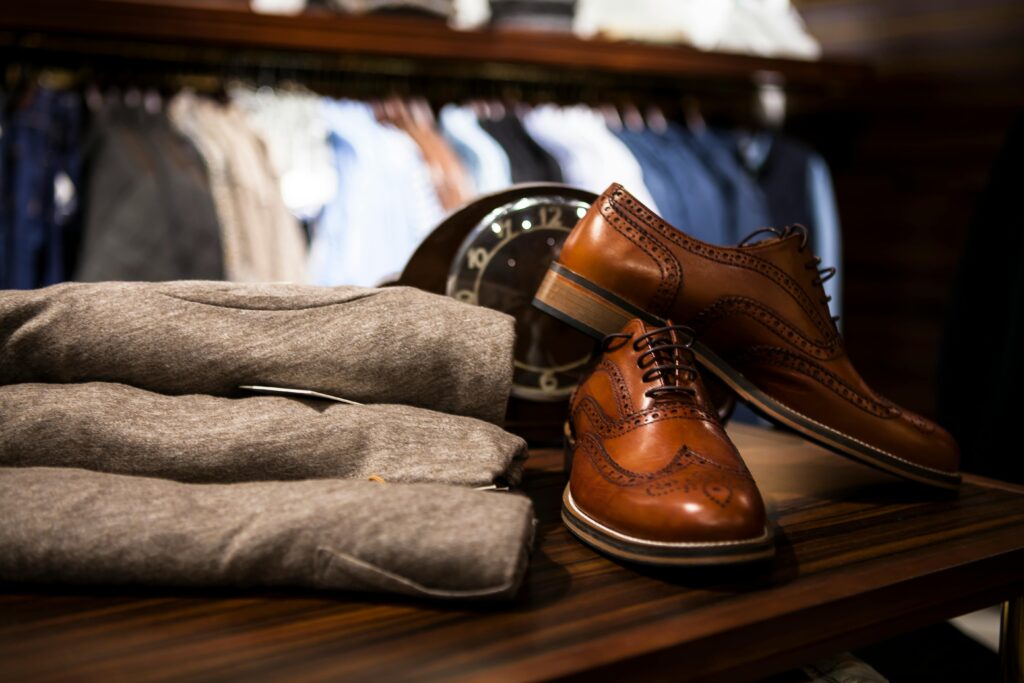
Finding your aesthetic as a grown man is not a trivial pursuit. It is an act of self-knowledge. The man who knows exactly how he wants to present himself — who has done the internal work to understand what he values, what he finds beautiful, what kind of impression he wants to leave — moves through the world with a quiet authority that no amount of expensive clothing can manufacture on its own.
“Fashion is what you buy. Style is what you do with it. Aesthetic is who you are.” — Anonymous
Why It Matters
Why Most Men Never Find Theirs
The majority of men never develop a true personal aesthetic — not because they lack taste, but because finding one requires a kind of intentional self-reflection that modern life rarely makes space for. Here are the four reasons most men stay aesthetically adrift.
01 They copy instead of curate
Inspiration becomes imitation. They see a well-dressed man, buy the same pieces, and wonder why it does not look the same on them. Aesthetic is not transferable — it must be translated through your own body, life, and personality.
02 They let comfort override intention
Defaulting to whatever is easy — the same jeans and hoodie, the same safe choices — is not a style. It is the absence of one. Comfort and aesthetic are not mutually exclusive, but comfort without intention produces invisibility.
03 They have never asked themselves the right questions
Aesthetic discovery begins with honest self-inquiry. Most men have never sat down and asked: what do I actually find beautiful? What am I drawn to? What does the version of me I most admire look like? Without these answers, shopping is just guessing.
04 They confuse aesthetic with trend
Trends are external. Aesthetics are internal. A man who is always chasing the current look will never develop a consistent visual identity — because his identity is always one season behind someone else’s.
The Discovery
The Questions That Reveal Your Aesthetic
Aesthetic discovery is fundamentally an introspective process. Before you can dress with intention, you need answers. These are not questions about clothes — they are questions about who you are, what you value, and how you experience the world visually. Take your time with each one.
Question 01
When you see a man whose style you genuinely admire, what specifically draws you? The fit? The colour palette? The restraint? The ease?
Question 02
What spaces do you feel most like yourself in? A city street, a countryside, a library, a workshop, a gallery? Your environment reflects your aesthetic sensibility.
Question 03
Which decades or eras in men’s style resonate with you most? There is always a period whose visual language speaks to something deep in your personality.
Question 04
If you could describe your ideal wardrobe in three words — not three trends, but three feelings — what would they be?
Question 05
What do you want people to feel when they see you across a room — before you speak a single word?
Question 06
Look at the pieces in your wardrobe you reach for most. Ignore what you think you should wear — what do you actually, instinctively gravitate toward?
The Profiles
Eight Aesthetic Profiles for the Modern Man
These profiles are not prescriptions — they are mirrors. Read each one and notice which language resonates. Most men find a primary profile with strong secondary influences. That combination is where your personal aesthetic begins to crystallise.
Profile 01
The Silent Architect
Precise, restrained, architectural. Every piece serves a purpose. Nothing is decorative. The beauty is in the structure and the silence between elements.
Clean lines Monochrome = Structural Minimal
Profile 02
The Earned Patina
Everything has a story. Quality that improves with use. Natural materials, worn-in textures, and an ease that comes from clothes that have lived a life alongside their owner.
Worn leather Natural fibers = Heritage Lived-in
Profile 03
The Urban Scholar
Intelligence made visible. Books, galleries, and long conversations inform every choice. Thoughtful layering, interesting textures, a hint of the academic and the artistic.
Textured layers Earthy tones = Intellectual Considered
Profile 04
The Modern Aristocrat
Old money ease. Understated luxury. The kind of elegance that does not announce itself — it simply is. Cashmere, linen, and the confidence of someone who has never needed to impress.
Cashmere Quiet luxury Tailored = ease Timeless
Profile 05
The Working Poet
Creative, expressive, and unafraid of individuality. The aesthetic is eclectic but intentional — unusual combinations that reveal a man deeply engaged with beauty in all its forms.
ExpressiveArtisanalUnexpectedPersonal
Profile 06
The Functional Purist
Form follows function — but function executed with excellence. Technical precision, clean performance fabrics, and the aesthetic of a man who demands that his clothing work as hard as he does.
TechnicalPurposefulCleanPrecise
Profile 07
The Rugged Classicist
The outdoors, craft, and physical engagement inform everything. Durable fabrics, honest construction, and a physicality that reads as earned rather than manufactured.
DurableWorkwearHonestGrounded
Profile 08
The Dark Romantic
Depth, mood, and deliberate intensity. Rich, dark tones. Dramatic silhouettes used with restraint. A man whose wardrobe suggests a rich inner life and an appreciation for the complex.
Deep tonesTexturedDramaticLayered
The Architecture
The Three-Layer Model of Aesthetic Identity
Once you have a sense of your aesthetic profile, the next step is understanding how to build an actual wardrobe around it. The three-layer model gives every man a clear architecture for translating aesthetic identity into daily dress.
Foundation
The Unchanging Base
The 8–12 pieces that never leave your wardrobe. These are the items that are most purely expressive of your aesthetic — a quality overcoat, the perfect trouser, a shirt you have worn a hundred times. They require no thought. They are simply you.
Character
The Contextual Middle Layer
Pieces that adapt your foundation to different contexts — professional, social, relaxed. These rotate more frequently but always align with your aesthetic. A blazer over a tee. Boots instead of loafers. The vocabulary stays consistent; the sentence changes.
Signature
The Distinctive Detail
One or two recurring elements that become your signature — a specific fabric, a watch, a particular colour, an unusual texture. These are the details that make people say: “That is so him.” Over time, they become inseparable from how you are perceived.
A signature is not chosen — it is discovered. Pay attention to what you return to again and again without thinking. That repetition is your aesthetic speaking to you.
The Practice
How to Build It in Practice
Aesthetic clarity does not arrive fully formed. It is assembled slowly, through a combination of honest self-reflection, deliberate observation, and iterative experimentation. Here is a practical path through that process.
- Create a visual reference — a private folder of images, films, and men whose style consistently resonates with you. Look for the patterns, not the individual pieces.
- Spend a week wearing only your most instinctive choices — what you reach for first, with no second-guessing. These pieces are already speaking your aesthetic.
- Identify your three non-negotiable aesthetic words. Not “smart” or “casual” — specific words like “worn,” “precise,” “earthy,” “dark,” “quiet.” These become your filter for every future purchase.
- Eliminate everything in your wardrobe that does not pass your three-word test. If it conflicts with who you are trying to become, it is not serving you — however much it cost.
- Buy one intentional piece — not a trend, not a bargain. A piece you have thought about for at least two weeks and that is a direct expression of your aesthetic profile.
- Wear it consistently and observe how it makes you feel. Aesthetic alignment produces a specific sensation — a quiet confidence, a sense of coherence. That feeling is your compass.
- Revisit and refine annually. Your aesthetic is not static — it deepens and clarifies as you do. A yearly review keeps your wardrobe honest and your identity current.
The Pitfalls
Mistakes That Dilute Your Aesthetic
Most aesthetic identities are not destroyed by dramatic mistakes — they are diluted by small, repeated compromises. These are the patterns that fragment a coherent visual identity into noise.
Trend Contamination
Buying one trendy piece “just this once” rarely stops at one. Each compromise fragments the coherence of an aesthetic that took time to build.
Shopping Without a Filter
Walking into a store without your three aesthetic words is the fastest way to accumulate pieces that almost fit but never quite cohere.
Dressing for Others’ Approval
When your choices are driven by what others will think, your aesthetic becomes a performance — readable as inauthentic by everyone, including yourself.
The Safe Middle
Inoffensive, forgettable, interchangeable. Playing it safe produces a wardrobe that communicates nothing — which is the opposite of having an aesthetic.
Premature Commitment
Buying an entire aesthetic at once before you truly know if it is yours. Aesthetic identity should be discovered slowly, not purchased all at once.
Ignoring the Body
Any aesthetic is only as strong as the fit and proportion on your specific body. What works on a reference image must be translated — not copied — to you.
The Maturity Factor
Why Age Makes Everything Clearer
There is something particular about finding your aesthetic as a grown man — as opposed to a younger one. The noise is quieter. The need for external validation has diminished. You have lived enough life to know what you actually value, as opposed to what you thought you should value. That clarity is the greatest aesthetic advantage available to any man.
In your twenties, style was exploration. In your thirties and beyond, it becomes consolidation. The man who uses that consolidation deliberately — who takes everything he has learned about himself and distils it into a coherent visual presence — produces a result that is exponentially more powerful than anything assembled through trend-following or social mirroring.
The grown man who truly knows his aesthetic carries it with an ease that is immediately apparent to everyone around him. It does not look effortful. It looks inevitable. It looks like him — because it is.
Your aesthetic is already inside you. The work is not to create it from nothing — it is to uncover it, clarify it, and have the confidence to wear it fully. Stop waiting until you have figured it all out. Start with one honest question, one intentional purchase, one morning where you get dressed in complete alignment with who you actually are. That is where it begins. And once begun, it does not stop — it only deepens.
— The Aesthetic of Becoming